

Please Choose Your Language
Views: 0 Author: Site Editor Publish Time: 2026-10-08 Origin: Site


Contrast forms the backbone of any automated inspection system. Engineers frequently rely on software algorithms to digitally enhance poor contrast. Doing so increases processing latency and limits line speeds. Camera sensors must capture distinct edge data during exposure. Otherwise, software algorithms cannot reliably recreate missing visual information. Hardware reality dictates the success of your entire vision system.
We must solve optical challenges before the image reaches the processor. This article establishes how selecting the correct wavelength dictates system reliability. By choosing the right illumination color, you minimize false rejects and optimize overall equipment effectiveness (OEE). You will learn to match specific wavelengths to materials and geometries. We will explore advanced hardware options for dynamic production environments. Mastering these lighting principles guarantees flawless contrast.
The Color Rule: To lighten a feature, use light of the same color. To darken a feature (increase contrast against a background), use the complementary (opposite) color.
Beyond Visible: Non-visible wavelengths (NIR and UV) solve complex inspection tasks by penetrating materials or triggering fluorescence, bypassing surface-level visual noise.
Dynamic Flexibility: Form factors like the multi-color machine vision bar light allow for software-controlled contrast adjustments on high-mix production lines without hardware changeovers.
Geometry Matters: Wavelength alone is insufficient; pairing the right color with the right delivery method (e.g., multi-spectrum coaxial machine vision light) is critical for reflective or curved surfaces.
Light interacts with physical materials in highly predictable ways. We call this the foundational rule of illumination. Materials either absorb or reflect incoming light rays. You can manipulate this behavior to isolate specific part features.
To lighten a specific feature, you match your light color to the part color. The object reflects this matched light back to the sensor. This process effectively washes out the feature against a darker background. Conversely, you can darken a feature to make it stand out. You achieve this by using the opposite color on the color wheel. The feature absorbs the complementary light. It then appears completely black to a monochrome sensor. This method yields maximum contrast for edge detection.
Most precision industrial inspections use monochrome cameras. You might wonder why color sensors are less common here. Color sensors use a Bayer filter over their pixels. This filter interpolates colors, which inherently reduces image resolution. Monochrome sensors capture raw luminance data without filtering. Pairing them with specific light wavelengths yields vastly superior edge sharpness.
Broad-spectrum white light presents another significant optical challenge. White light contains multiple wavelengths. Each wavelength bends differently as it travels through glass lenses. We call this phenomenon chromatic aberration. It causes edge blur and color fringing on sub-millimeter inspections. Monochromatic light eliminates this optical defect entirely. A single wavelength bends uniformly through the lens, ensuring razor-sharp edges.
Table 1: Visible Machine Vision Wavelengths Comparison
Color Wavelength | Ideal Surface Types | Primary Application Advantage |
|---|---|---|
Red (620-660 nm) | Dark, matte, or opaque surfaces | Cost-effective; offers slight penetration into opaque materials. |
Blue (460-490 nm) | Highly reflective metals, silver, steel | Scatters less; provides razor-sharp edge detection for micro-defects. |
Green (520-530 nm) | Multi-colored PCBs, red/amber features | Excellent for darkening red elements to create stark black contrast. |
White (Broadband) | Multi-colored packaging, retail barcodes | Enables true color verification when paired with color cameras. |
Selecting a visible wavelength requires profiling your specific inspection target. Let us evaluate the core options used across modern manufacturing lines.
Red light serves as the standard for general-purpose inspection. It works exceptionally well for dark or matte surfaces. Red wavelengths are relatively long. They penetrate slightly deeper into opaque materials than shorter wavelengths do. This makes red highly cost-effective and versatile for standard presence/absence checks.
Blue light excels when inspecting highly reflective metals. It is perfect for silver, steel, and machined aluminum. Blue wavelengths are much shorter than red ones. They scatter less upon striking a surface. This precise behavior provides razor-sharp edge detection. You should specify blue light for finding fine surface scratches or micro-defects.
Green light solves specific contrast challenges. Engineers often use it for inspecting multi-colored printed circuit boards (PCBs). Green sits opposite red on the color wheel. You can use it to specifically darken red or amber features. This renders copper traces or specific electronic components jet black for the sensor.
White light combines the full visible spectrum. It is best suited for applications requiring explicit color verification. You must pair it with a color camera for this purpose. It also helps read barcodes on heavily multi-colored packaging. However, white light has a major drawback. It produces lower overall contrast compared to targeted monochromatic setups.
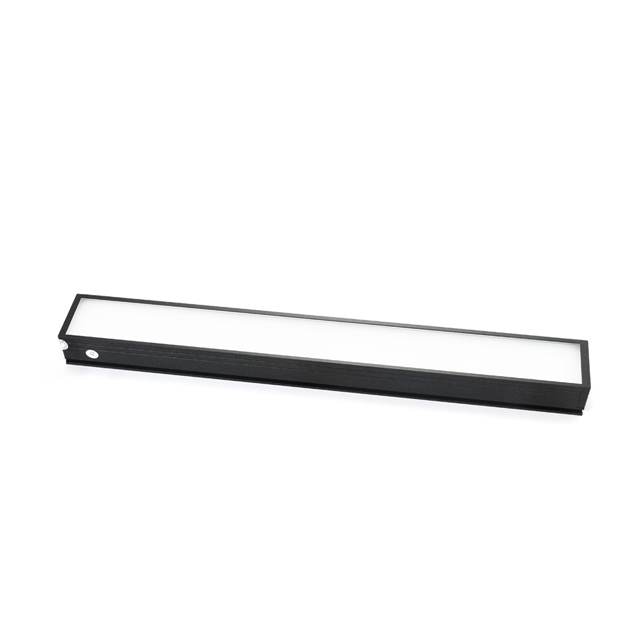
Sometimes, visible light simply cannot solve the inspection challenge. You must push beyond the visible spectrum. Near-Infrared wavelengths typically operate between 850 and 940 nm. These long wavelengths interact uniquely with various industrial materials.
Penetration is the primary use case for NIR. A dedicated NIR machine vision light can see straight through opaque plastic bottles. This allows you to verify internal liquid fill levels instantly. It also penetrates certain semiconductor materials. Engineers use NIR to inspect internal structures within silicon wafers.
Color neutralization is another major application. Consumer packaging often features chaotic, multi-colored printed artwork. This artwork creates severe visual noise for cameras. NIR light completely ignores this printed ink. It allows the camera to focus strictly on physical defects. You can easily inspect tears, creases, or heat seals without artwork interference.
These wavelengths also provide distinct operational advantages. NIR is completely invisible to human operators. High-intensity strobe lighting can cause severe eye strain on populated assembly lines. Switching to NIR eliminates these safety hazards entirely. Your vision system can flash rapidly without disrupting the factory floor.
Wavelength selection is only half the battle. Part geometry heavily influences contrast. Angled directional light often creates blinding specular reflection. This glare ruins inspections on flat, highly mirrored, or transparent surfaces. Glass panels, polished metals, and glossy PCBs are notoriously difficult to illuminate.
The coaxial lighting technique offers a brilliant solution to specular glare. It utilizes on-axis illumination. The fixture directs light straight down toward the object. The light passes through an internal beam splitter. The camera looks down through this same optical path. This captures uniform, glare-free reflections from mirror-like surfaces.
Modern manufacturing requires even more flexibility. Integrating multiple wavelengths into a single coaxial housing solves high-mix part inspections. A multi-spectrum coaxial machine vision light provides this capability. It enables automated switching between red, blue, or IR channels.
The system adapts based on the specific material currently on the line. Different batches require different wavelengths for optimal contrast. Multi-spectrum fixtures handle this dynamic environment seamlessly. You achieve perfect illumination for every part without manual fixture adjustments.
High-Mix/Low-Volume (HMLV) manufacturing lines present massive lighting challenges. Traditional setups require manual hardware changeovers when product SKUs change. This process wastes valuable production time. Operators must physically swap out lighting fixtures and recalibrate angles.
Scalable lighting solutions eliminate this downtime. A programmable multi-color machine vision bar light features RGBW capabilities. It allows your PLC to trigger specific color channels instantaneously. The system reads the incoming barcode and fires the exact color required for that SKU.
Initial CapEx is naturally higher than buying simple single-color bars. However, the return on investment justifies the upgrade quickly. You realize these gains through eliminated changeover downtime. You also drastically reduce your spare-parts inventory, as one fixture replaces four.
Consider an application inspecting a mixed stream of automotive components. The line processes black, red, and silver plastics sequentially. Contrast requirements shift from minute to minute. A multi-color bar light handles this flawlessly. It pulses green for the red part, and blue for the silver part, maintaining optimal OEE.
Do not guess when designing your optical setup. Follow this structured framework to ensure reliable, high-contrast imaging.
Material and Geometry Profiling. First, determine the surface finish. Is it matte, glossy, or transparent? Identify the part's geometry. This dictates both your color requirement and your form factor, such as a bar, ring, or dome.
Ambient Light Rejection Strategy. Factory floor lighting constantly shifts. Forklift strobes and skylights degrade image quality. Best Practice: Always pair your monochromatic LED lighting with a matching optical bandpass filter on the camera lens. This isolates your inspection from external visual noise.
Thermal and Strobe Considerations. LED wavelengths can drift if the fixture overheats. We call this a color shift. Common Mistake: Running high-intensity LEDs continuously without proper cooling. Solution: Specify high-quality heat sinks. Utilize strobing (overdriving) to maintain intensity. Strobing ensures exact wavelength stability while extending hardware lifespan.
Proof of Concept (PoC) Testing. Never specify hardware based purely on theory. Request a machine vision light evaluation kit from your vendor. Validate your contrast values on actual production parts. Always test under real-world factory tolerances before finalizing the purchase.
Contrast firmly dictates the reliability of any automated inspection system. If you cannot see the defect clearly in the raw image, software cannot save you. Moving from a generic white light to a highly targeted monochromatic system is essential. Adopting NIR or programmable multi-color fixtures drastically improves underperforming vision systems.
These targeted hardware upgrades provide immediate operational stability. They reduce processing latency and enable faster line speeds. Begin by auditing your current false-reject rates. Next, test sample parts against specific wavelengths using an evaluation kit. Upgrade your lighting hardware before investing in expensive new software or camera sensors.
A: It is possible, but highly inefficient. Color sensors feature internal Bayer filters that block incoming light. This reduces overall camera sensitivity by up to 60%. Monochrome sensors paired with colored light provide vastly superior sharpness, inspection speed, and edge contrast.
A: Ambient light degrades contrast by introducing unmeasured wavelengths into the camera sensor. Skylights, overhead LEDs, and forklift strobes cause unpredictable shadows. The standard solution involves using monochromatic illumination paired with a strict optical bandpass filter on the lens. This blocks everything except your dedicated light source.
A: White LEDs degrade faster. They rely on a phosphor coating to produce white light. This coating degrades over time, slowly shifting the color temperature. True monochromatic LEDs (Red, Blue, NIR) degrade slower and maintain absolute wavelength stability much longer. Proper heat management remains critical for all types.


